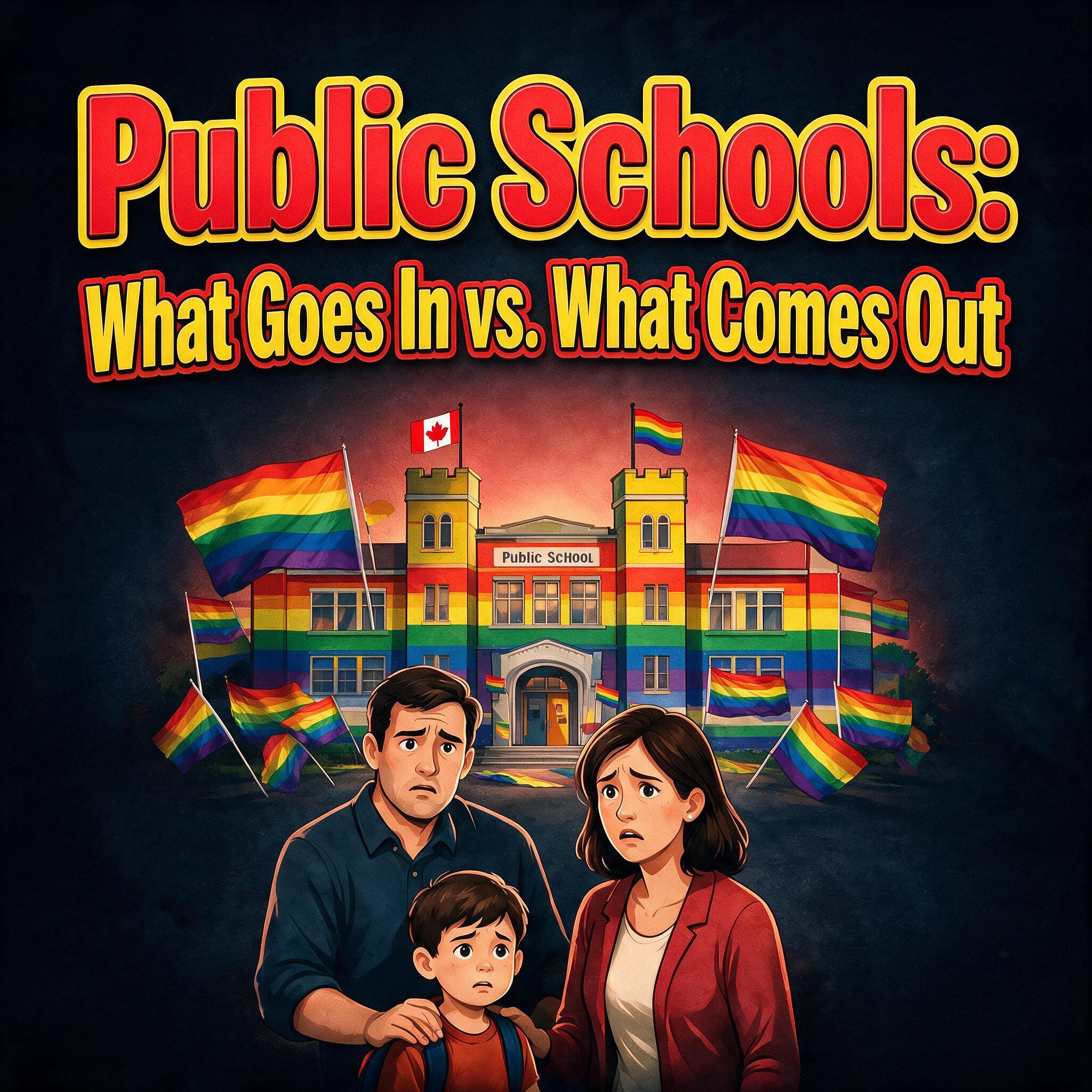
Public Schools: What Goes In vs. What Comes Out
By Jawed Anwar
A Movement Taking Shape
On July 26, 2026, hundreds of families and faith community members gathered at Celebration Square in Mississauga for the Haya Parade — a public declaration of values centered on modesty, faith, and family. Organized by the Haya Movement of Canada, the event brought together participants from multiple religious backgrounds, united around the belief that children deserve to be protected, that parental authority must be preserved, and that the family is a sacred institution.
We are deeply grateful to every individual and family who overcame hesitation and fear to stand up and be counted. Events like these matter — not just symbolically, but practically. The truth is that even now, the vast majority of Canadians share the core religious and family values we hold dear. What they need is a voice, leadership, and the courage to speak. We — and especially our youth — can provide all three. This is precisely the Quranic obligation of amr bil-ma'rūf wa nahi 'anil-munkar: to enjoin what is good and to prevent what is evil. We must fulfill it in the most constructive and effective way possible.
The School Has Changed — But Have We Noticed?
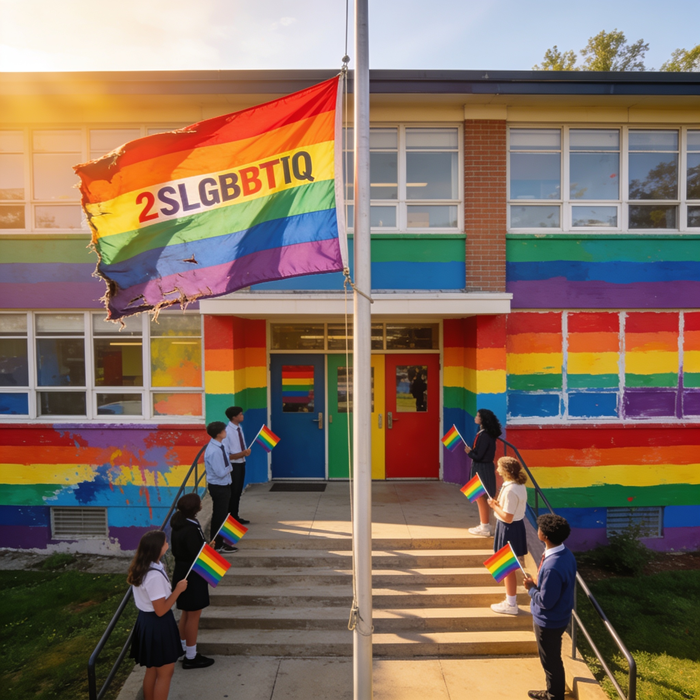
Back in 2013, when the Ontario Legislative Assembly passed Bill 13, the Accepting Schools Act, something fundamental shifted in the province's public education system. At the time, a warning was sounded: we once said, "hearts will change when education changes." Today, that warning has become a stark reality, and it can be restated plainly — genders will change when education changes.
You send a biological boy or a biological girl to school. But inside that school operates what can only be described as a gender identity machine — a structured, curriculum-embedded process that can graduate your child into any sexual orientation or gender identity the system promotes. And perhaps most alarming of all: parents are being deliberately excluded from knowing about it.
The Form Your Child Fills Out at School
Inside public schools, children are given forms that contain questions no parent ever sees. These forms ask children:
- What is your gender at home — and what will your gender be at school?
- What pronouns are you called by at home — and what pronouns should be used to address you at school?
The number of officially recognized pronouns being introduced to children now exceeds 50. Beyond the traditional he/him and she/her, children are presented with options such as: they/them, ze/zir, ze/hir, xe/xem, per/per, ey/em, ne/nem, ve/vis — and many more. This is not incidental. It is a deliberate, organized effort to reshape the minds, psychology, and self-perception of children — beginning in kindergarten and continuing all the way through high school.
At any grade level, a child can come under the influence of this system and be drawn into a culture of gender confusion. This does not happen by accident. It is systematic.
The Dangerous Misconception in Our Communities
For years, a comforting but dangerously mistaken assumption has circulated in many Muslim religious circles: "If we maintain a strong Islamic home environment, it doesn't matter where we send our children to school."
This thinking reflects a fundamental misunderstanding — of Deen, of the public education system, and of the society we live in. Sending your child to a school where their gender identity, sexual orientation, and worldview are being actively reshaped — while expecting the nightly Quran lesson to undo it — is, to put it plainly, like dropping your child off at a nightclub at midnight and expecting the Fajr prayer to fix everything by morning.
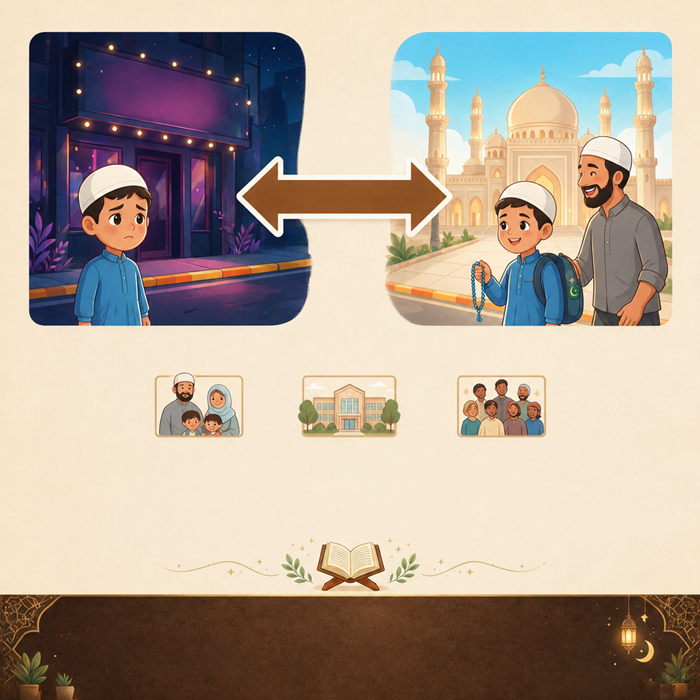
Our children are our greatest wealth — more precious than any property, any career, any comfort. When we sell their ākhirah cheaply in hopes of securing their worldly future, we end up losing both. Go and speak to the Muslim families whose children were quietly gender-transitioned through school programming — families who only found out after the psychological and medical process was already well underway. Did those families gain the world?
"We Can't Afford Islamic School" — A Misconception Worth Addressing
The most common response from parents when this issue is raised is: "We cannot afford an Islamic school, so we have no choice."
This response — however understandable — reflects a confusion between school and education. School is merely one delivery mechanism for education. Education itself is far broader, richer, and more flexible than any single institution. School depends on education; education does not depend on school.
There are practical, affordable, and increasingly accessible alternatives for Muslim families who are genuinely concerned but feel financially constrained. We will explore those in detail in the future articles — covering homeschooling models, cooperative learning networks, hybrid schooling, online Islamic curricula, and other real options available to Canadian Muslim families.
Islamic Schools Directory:
https://www.as-seerah.com/schools/list/index
What You Can Do Right Now
This is not a new conversation. Seminars and educational conferences on this exact topic have been held, and those resources are available on the AsSeerah YouTube channel. If you have not yet watched them, now is the time.
The situation in public schools is not getting better. The curriculum frameworks embedded through legislation like the Accepting Schools Act continue to expand in scope and intensity. Awareness alone is not enough — it must be followed by action.
Our children deserve better than passive hope. They deserve deliberate, informed, and courageous parenting.
Jawed Anwar is the Editor of As-Seerah.com and the host of the AsSeerah Channel This article is adapted from a video script originally delivered in Urdu.
The Video
Recent posts
-
June: Parents, Be Aware! Protect Your Children from Fahish Celebrations
28 May 2025 -
Sensitive Curriculum Information Letter - Muslim Family
10 June 2024 -
Ontario Parents: Keep Your Kids Home June 3 to 7 and Reach Out to Your MPPs and PC Leadership Now
23 May 2024 -

PC Ontario Budget: Our Two Points Suggestions on Education
31 March 2024 -
Parents, Act Now: This Weekend's PC Policy Conference – Reach Out to Your PC MPPs
30 January 2024 -
FIX it Now: A One-Year Public School Protest
23 September 2023